
Archeological Abyss
A First Person Horror Experience
Level Design
Project Summary
Archeological Abyss is a first person horror experience which takes inspiration from the Amnesia-series. The focus for this project was a non-linear level with puzzle elements that the player needs to solve, an enemy AI the player needs to avoid in order to survive, and an assortment of blueprints that create unique challenges for the player to overcome.
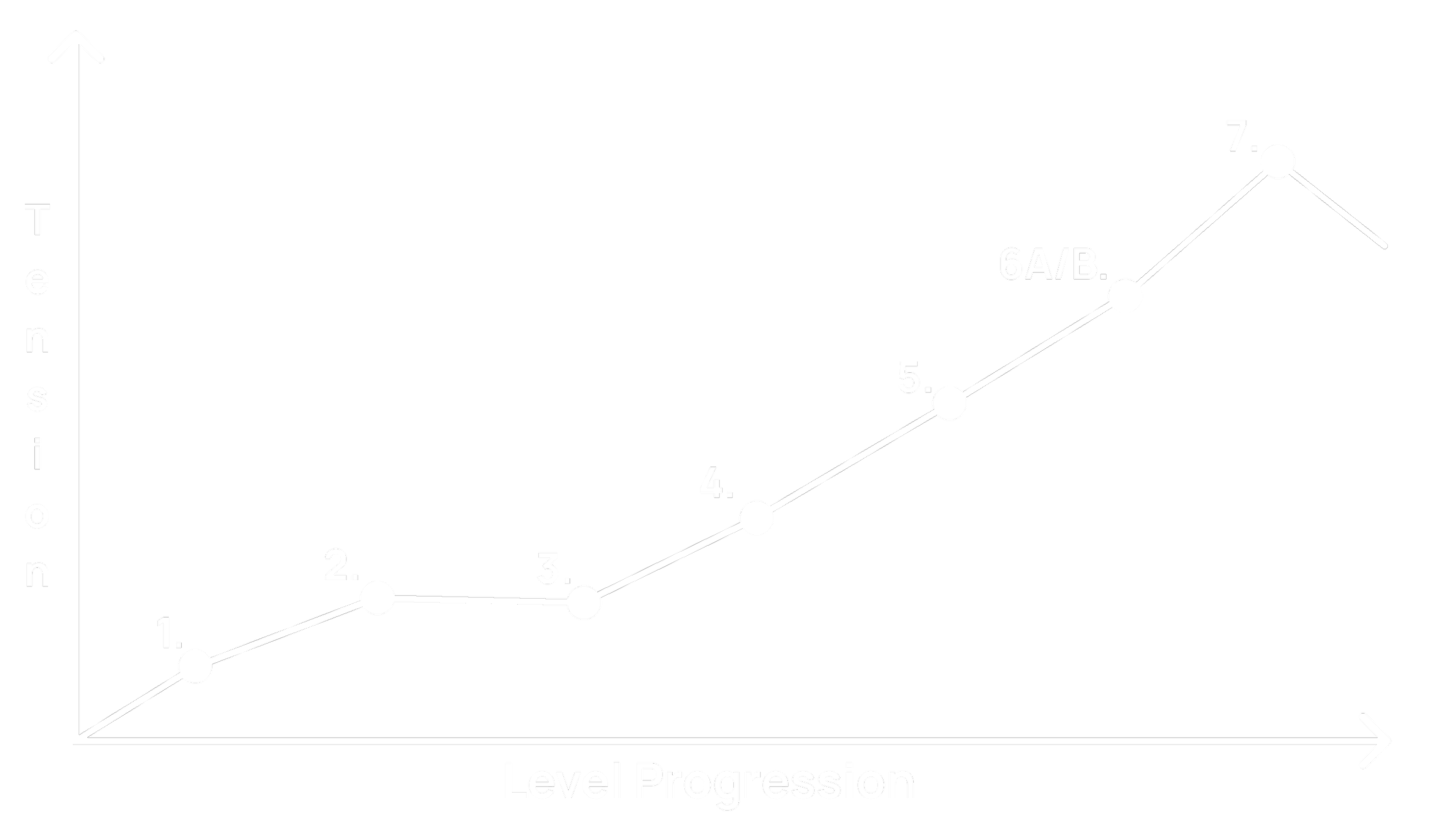
My goal with this piece was to create a level which the player can take on in the order they want to, with low tension moments for atmosphere and high tension moments to thrill the player, differently sized areas for building suspense and awe, and simple blueprint actors to create exhilarating gameplay scenarios.
Introduction
Developed in 4 weeks, half-time work
Focus on level design with claustrophobic areas, eerie atmosphere, low & high tension moments
Enemy AI that works scenarios in the level
Simple blueprint actors
Breakdown
Assets & Software Used
Playthrough Videos
Level Overview
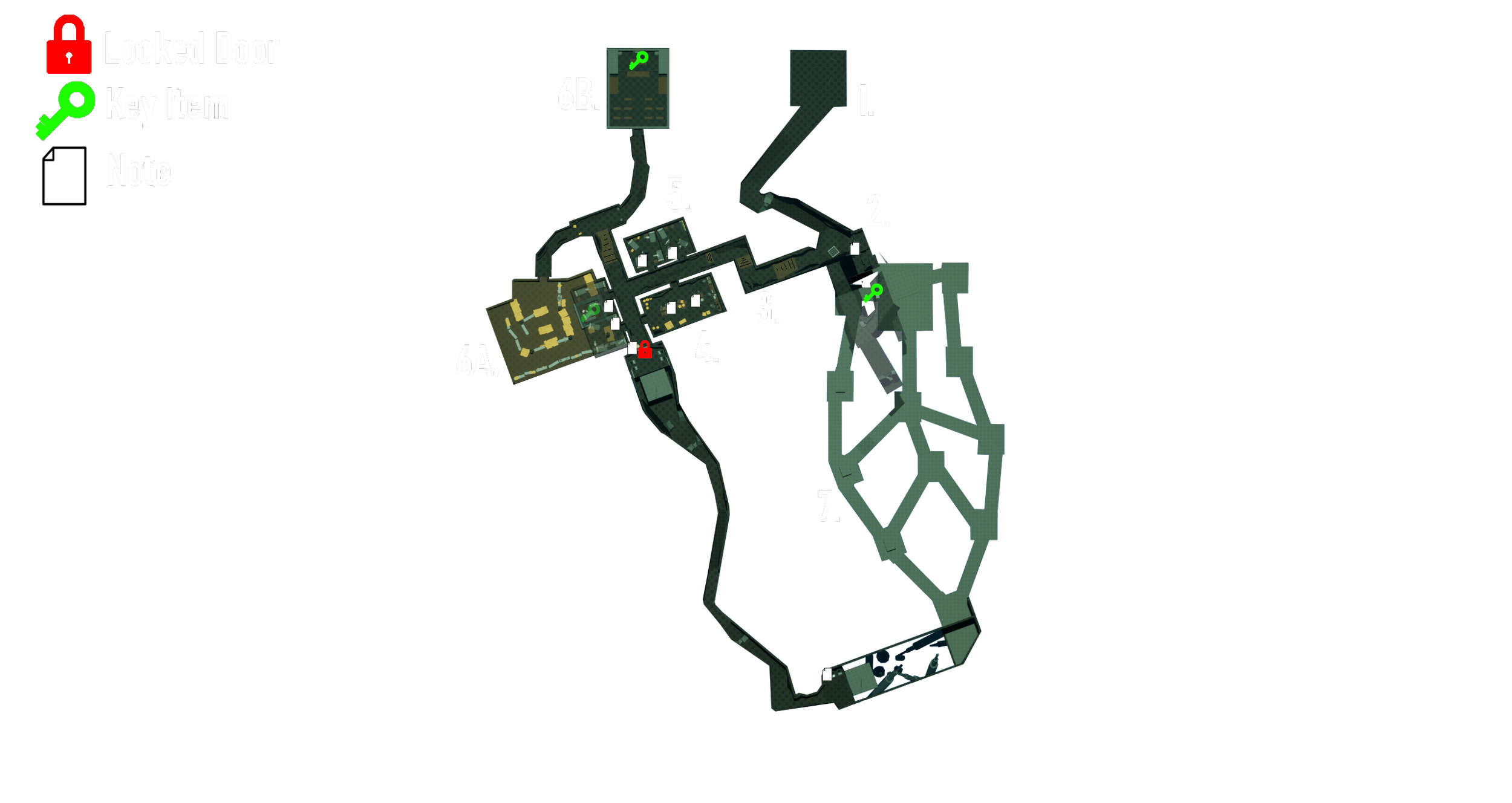
1: Level Start
2: Locked Exit
3: Connecting Tunnels
4: Lab
5: Living Quarters
6A: Storage
6B: Chapel
7: Archeological Site
Tension Graph
Design Techniques
Due to the nature of underground tunnels being hard to navigate, I decided to use signposting to indicate what area the player is in or moving towards and breadcrumbing in the form of assets in the level and notes which give the player clues as to what needs to be done.
The signposting helps ground the player in the environment, as it both communicates to the player about where they are and contextualizes the world due to the need of signs in a series of underground tunnels. The breadcrumbing also helps give clues and foreshadows to the player of what is to come.
Signposting & Breadcrumbing
The setting of the level, an underground archeological site, gave me the oppertunity to put a heavy emphasis on serving and servant spaces, with the rooms acting as serving spaces and the connecting tunnels acting as servant spaces.
Using servant spaces gave the level a better sense of planning and structure, as each serving space becomes unique and memorable due to them being supported by the servant spaces connecting them.
Served & Servant Spaces
To contrast the tight tunnels the player navigates in the level, I added a large open ravine area at the end of the level to serve as the final gameplay segment of the game before the player loops back to the start. The whole area is seen earlier by the player before they arrive in the arena to complete the final challenge.
This vista acts as a reward for the player, to show how far they have come, and as a memorable moment due to the juxtaposition of the huge cavern compared to the smaller tunnels visited earlier.
Rewarding Vista & Juxtaposition
The tunnels let me use bait and switches quite naturally to form the level layout and flow. By enticing the player to explore a point of interest in front of them with a red herring, they can then be surprised by finding a way to continue that was previously hidden from them.
These bait and switches helps with keeping the player on their toes, as they never know what to expect when playing through the level. The red herrings also helps with luring the player to specific positions to set up the twist I wanted to present.
Bait & Switch with Red Herrings
Design Choices
To help with the monotony of underground tunnels, I wanted to make each area of the level unique in their purpose, scenario, and aesthetic. Creating different types of areas that serve different purposese and fill them with different types of assets helped with giving all areas an identity, which also helps with the navigation of the level as they are distinct from one another.
I also added scripted events to some rooms to create unique moments that puts the player on edge and to make their exit out of said rooms different and more difficult.
Distinct Areas
I wanted to have an enemy AI the player must hide from to add extra varietyon the gameplay front. Using Amnesia as a base, I made the player unable to affect the enemy to create extra tension whenever it appeared.
I created three unique scripted events where the enemy AI appears, and each event requires different solutions to overcome. This helps creating high tension moments that break up the low tension exploration.
Setting these events up were quick and seamless, as the concept for each scripted event required simple behaviour on the enemy AI’s behalf.
Encounters
Similar to the enemy AI, puzzles were implemented to help with variety in gameplay and to help the player explore more of the level.
For the first puzzle I decided to use a door which requires both a physical key and a code to open. The key and code can then be placed in different areas of the level, which the player needs to explore in order to find. The code is also generated by a seperated blueprint actor, which ensures that all playthroughs have unique codes which is required to progress.
I also wanted to have a puzzle in the final arena which needs to be solved when the player is chased by the enemy AI. I repurposed my code generator and placed each number out in the final arena to create a sense of panic as the player needs to find the correct number for each panel.
Puzzles
Production
I started by planning out the different types of areas I wanted to implement. I gathered reference images for different types of areas that might fit the level I wanted to create on my Millanote board and used them as inspirations for all the different areas in the level.
This helped with creating unique environments that helps distinguish them from one another, which was key due to the uniformity of the setting I had chosen for this level.
Reference Images
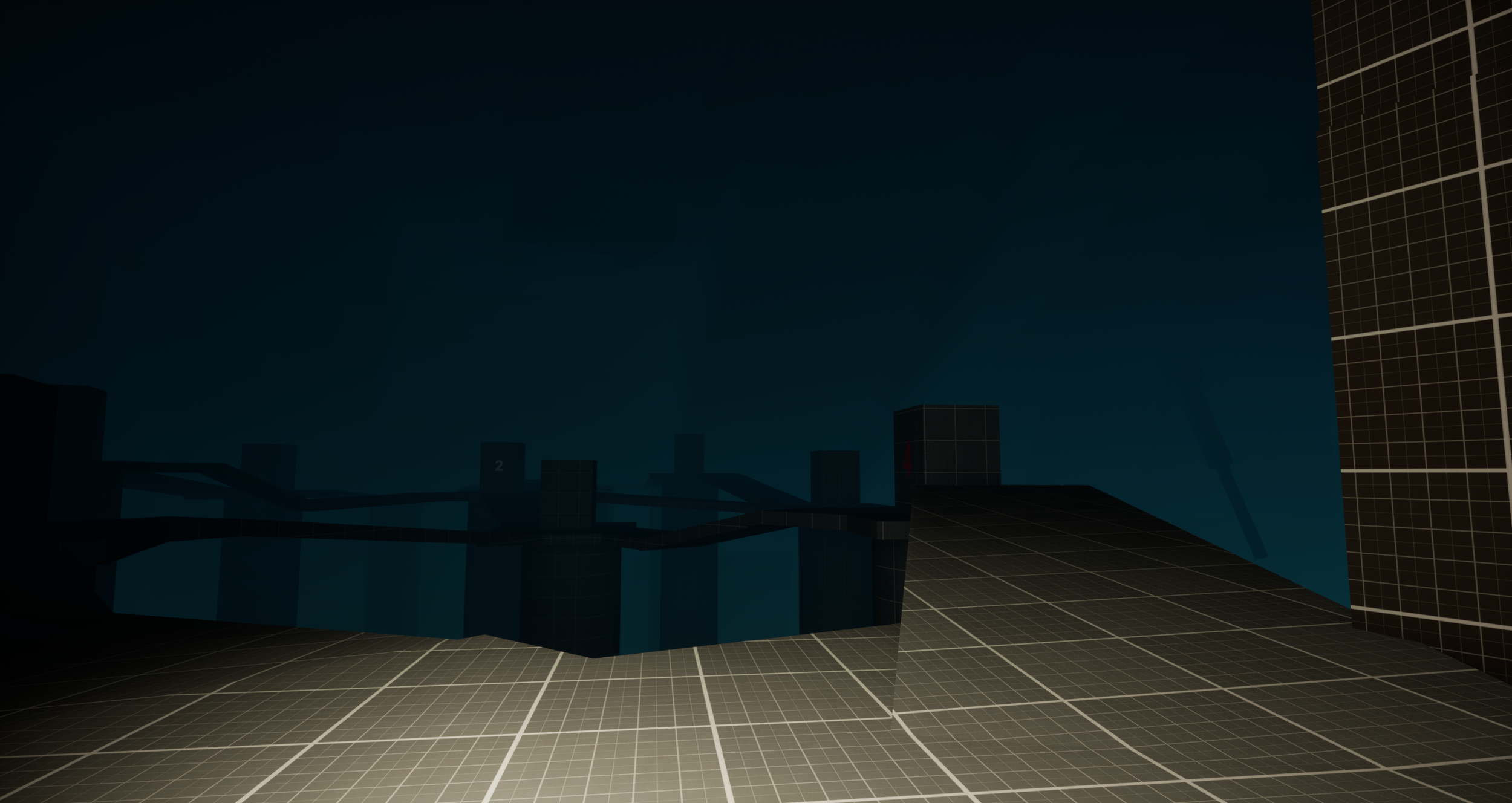
Because the size of the tunnels were important for setting the mood of the level, I began with the level blockout in Unreal to get a better feeling for how I wanted to form the tunnels.
This helped me form out my level and gave me a good approximation of how I wanted the main rooms to look as well, so starting with the blockout for this level helped me in the creation of the level. After the base blockout was created, I could then further iterate on each area to enhance them.
Blockout
A variety of blueprints were created for this project to create unique challanges and moments in the level. To give as much time as possible on the level design, I decided to make the blueprints as simple as I could.
One blueprint actor that helped with the gameplay was the code generator I built. To make each playthrough unique I can make the code generator generate random four number codes which can be connected to keypad displays that unlock doors or elevators with a code interface.
Another blueprint actor that contributed to the level was the notes. These give context as to what happened, what will happen, and what needs to be done. Using data tables to create unique notes made it easy to create new entries the player can find.
Blueprint Actors
Blueprints
The most complex blueprint is the enemy AI, which is set up to act differently in multiple scripted events. Creating the AI was fun and quick, as each behaviour in the blueprint is simple, which let me to fine tune it to make it feel better.
For this project, I decided to create the behaviours directly in the blueprint actor rather than using a behaviour tree. This was chosen because the simplicity of each scripted event didn’t require a lot of nodes to function how I wanted it to.
A simple material that incorperates a fresnel node and lightsources was also used to give the enemy an eerie, ghost-like apperance.
The end result was an enemy AI that helped creating unique scenarios for the player to overcome.
Enemy AI
Blueprint
Reflections
Overall I’m happy with how this project turned out. The cramp feeling of the tunnels is something I’m quite pleased with as it contrubites to the atmosphere of the level. Getting others to playtest the level as well helped me with further iterating and evolving the level to its current state. Because this project had a development time of four weeks, some features had to be cut or scoped down to meet the deadline for this project.
If I had more time to work on the project I would focus on making each area of the level larger with more rooms and details to explore. As it is currently it works, but having more to explore would definitely add to the mystery and exploration aspects of my level.
Another aspect I would develop further is the enemy AI and give it more complex behaviour. Having the enemy constantly presant by having it roam around the rooms or perhaps travelling through designated spots on the map would help with the feeling of being scared and followed. This could also be combined with more items the player can find to defend against them, which would deepen the gameplay experience.
This could also be combined with an inventory system, which could have room for the notes the player picks up, which could give the player an easy way to access all the information that is presented to the player via notes instead of having to walk up to the notes to read them.
To conclude, it was a fun project to work on, and a lot was done during a short amount of time. Adding the suggestions written earlier would have been fun to see, but the project came together quite well all things considered.
Thank you for reading this, it was a pleasure to present this!