
Other Projects
Game projects I’ve worked on before The Game Assembly.
Iterum
“Conquer Gaul in Caesar's legendary campaigns. Every choice shapes your empire—will you lead it to glory or ruin? Keep your people fed, your cities thriving, and your legions strong as you forge your legacy through the ages.”
About
Internship
Studio: Evergreen IT AB
Role: Level/Narrative Designer
Work Period: 10 Weeks
Game Engine: Proprietary
Platform: PC
Breakdown
Working on Iterum at Evergreen IT AB was my first time working on a game in a professional environment, and it gave me a lot of valuable experience that I have taken with me. This was part of my internship course at Södertörn, which I did over the summer break right before starting at The Game Assembly.
My job as a level and narrative designer was to create a scenario with tasks that the player can play through. My work used real life historical figures as references to set up context for what the mission tasks were.
To set up the mission I worked on I used the built-in level editor that came with the game. I got the oppertunity to use the different tools provided to create different timed events and requirements the player needed to fulfill in order to complete the mission. I also got to give feedback to the programmers regarding different features and bugs I encountered when working.
The game can be found here.
Summary
Diener Dates

“Diener Dates tasks you with running the diner of your dreams, a diner you would die for (literally). Customise the interior, purchase different types of food and make friends or enemies with the local clientele!”
About
Game Project at Södertörn University
Studio: LG-BLT+ Games
Role: Level/Technical Designer, Programmer, Writer
Development Time: 10 Weeks
Game Engine: Unity
Platform: PC
Breakdown
This was my first game project that spanned longer than a month during my time at Södertörn University, which gave me and the team a lot of time to polish features and bugs that I encountered during development. It was also my first foray into the visual novel genre, which was a fun learning experience. My group was tasked with creating a game that appealed to a non-traditional target demographic, i.e non-gamers, which is why we chose to create a visual novel.
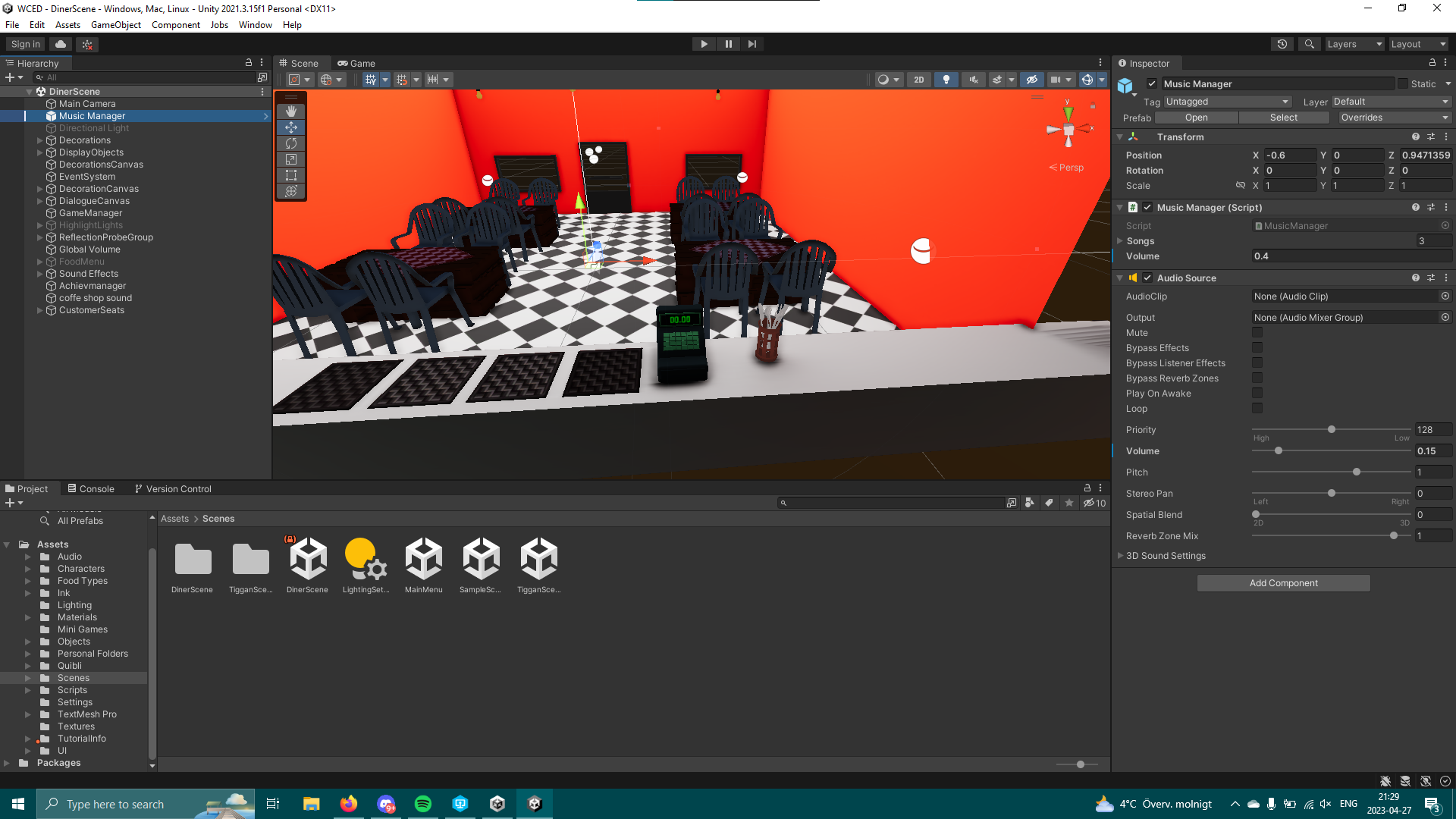
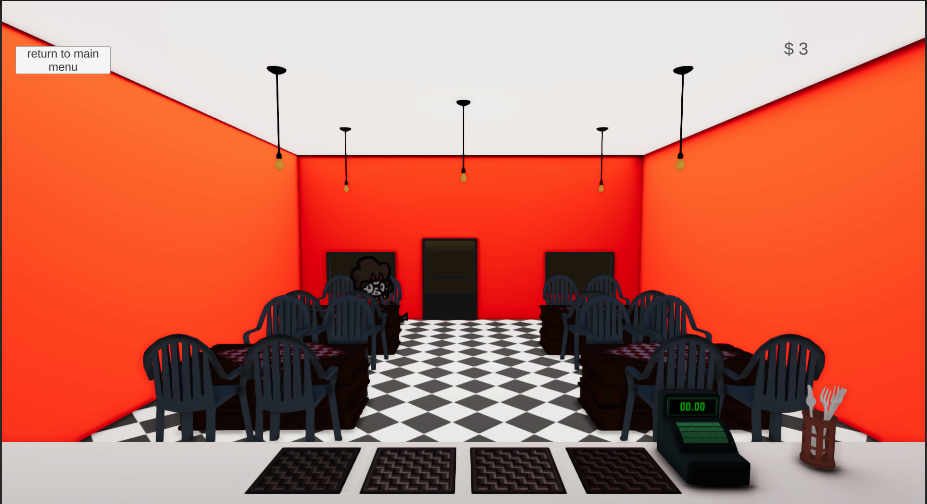
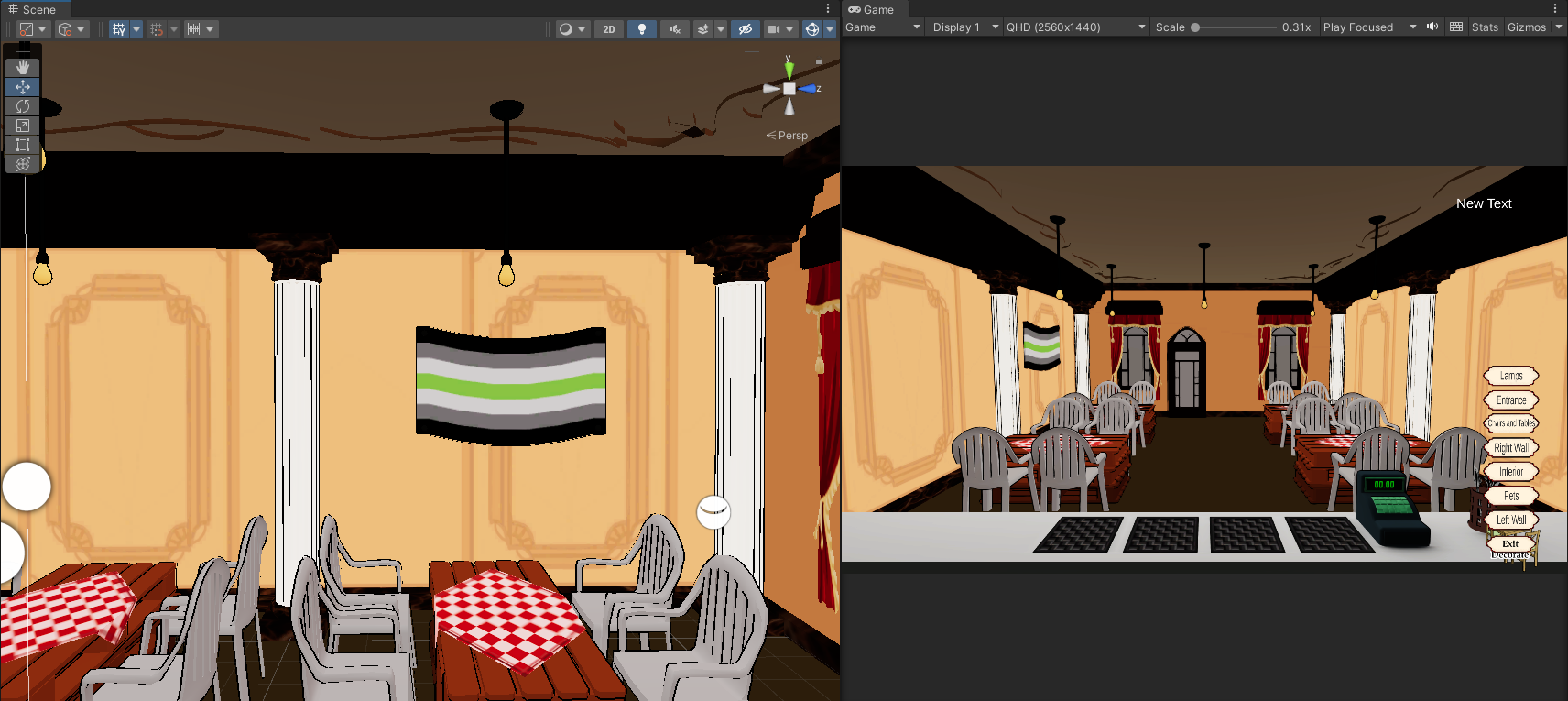
My job during development was to create a shop system that the player could use to buy furniture for their diner, which involved me creating different scripts that communicated with each other to replace different furniture types and check the balance of the player’s money.
I was also responsible with the layout and placements of furniture in the diner, as well as writing three of the characters the player can meet. My goal with the level design and writing was to create a cozy and inviting atmosphere for non-gamers.
Alongside my normal tasks, I also helped with fixing issues that occured during development and with balancing the affinity system for the characters I wrote to balance the game and give dialogue choices consequences.
The game was nominated for Best Diversity at the 2023 Swedish Game Awards. The game can be found here.
Summary
Peaklandia
“Explore the vast abandoned theme park resort Peaklandia and uncover the mystery of what happened there and why no one has made it back out alive.”
About
Thesis Project at Södertörn University
Group: 2 Programmers/Tech Designers, 1 Level Designer, 1 Audio Designer, 4 Game Artists
Role: Technical Designer, Programmer
Development Time: 12 weeks (on-hold)
Game Engine: Unity
Platform: PC
Breakdown
As part of my thesis for Södertörn University, I teamed up with seven other students to create a game we could use for our data gathering. The game is a survival horror game where the player is tasked with completing puzzles and gathering items to escape an abandoned underground resort complex. While the player navigates around, a monster lurks around and tries to kill the player, which leads to the player needing to sneak around and use items to distract the monster.
Me and my lab partner were researching how different monitor and audio setups affect immersion in horror games, so my task for this game was to create as many immersive elements as possible, and for that I tried to make an experience that was almost completely diegetic, with no HUD and minimal UI for inventory. I was responsible for the character controller, inventory system, interactables, and a VR mode.
The idea I had for the player character was to emulate the feeling of bodycam footage and games inspired by it, so I made use of a script that rotates the player’s arm when looking around to simulate how an arm would rotate when looking around with a flashlight. I also added interactables, such as lockers, doors, and items, which the player can interact with by pressing E.
I also made an inventory system which is almost diegetic, with the exception of the icons for each item and the number that indicates the amount of said item. The inventory system is supposed to emulate the action of taking out a backpack and looking through it to find what you are searching.
Finally, made a VR character controller which has the same features as the normal character controller, but utilizes VR controllers to emulate the player needing to aim their flashlight around, using items and looking through an inventory.
While the project never came to anything beyond research usage, I’m still happy with how many of the elements I worked on came out, as I think they could be further expanded on to create a truly immersive and terrifying experience. You can read the paper here.
Summary